
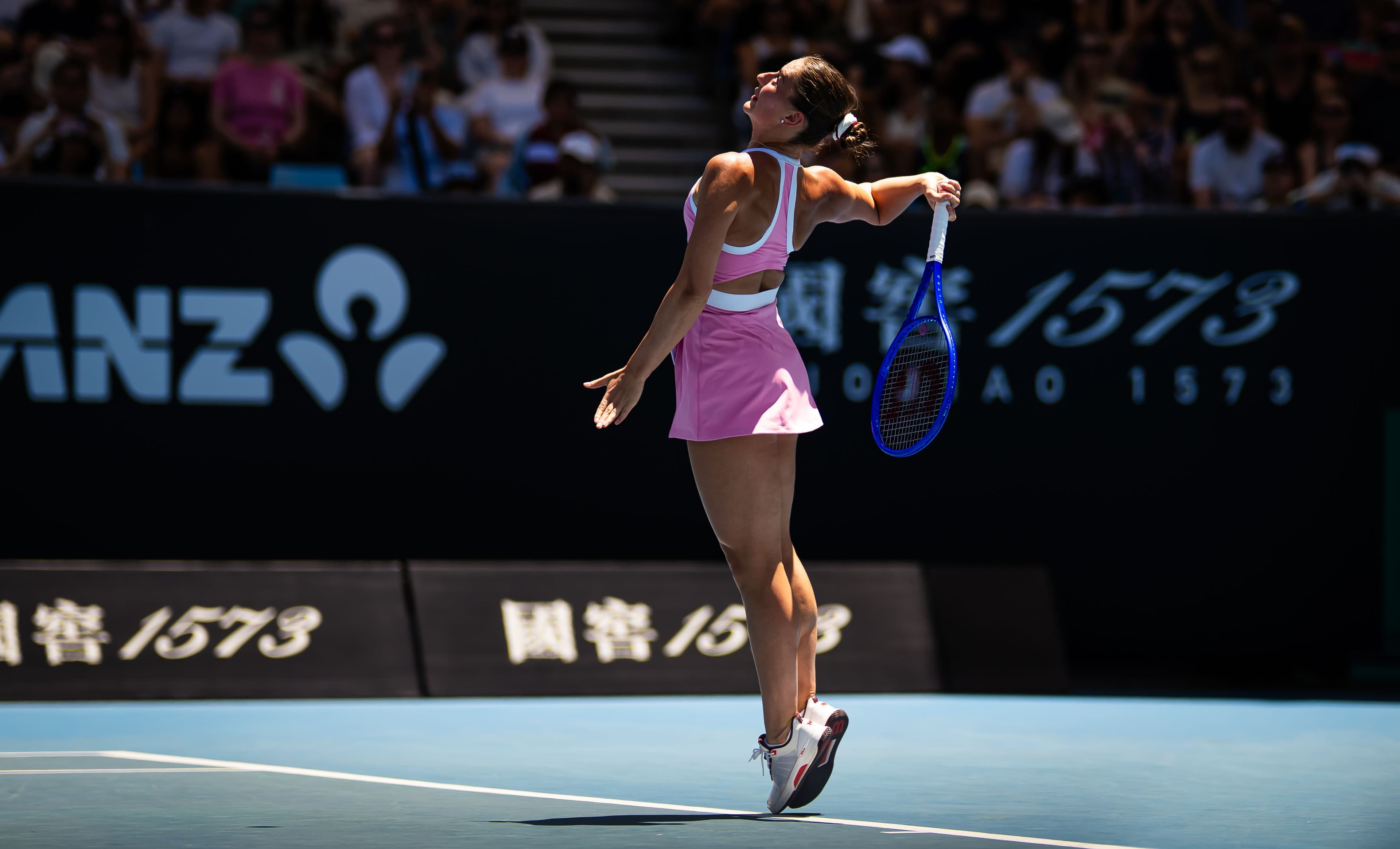
The Australian Open has always been more than just the first Grand Slam of the year. It sets the tone for the entire season, revealing early form, testing preparation, and showcasing how players adapt to the evolving demands of the modern game.
As the 2026 ATP and WTA seasons begin in Melbourne, the tournament once again highlights where tennis is heading, from environmental challenges and rule adjustments to equipment performance under extreme conditions.
The Australian Open: Where the Season Is Stress-Tested
Played in some of the toughest conditions on tour, the Australian Open remains a benchmark for physical resilience and preparation. High temperatures, long rallies, and intense match schedules place immediate demands on players’ bodies, recovery routines, and equipment.
In recent years, tournament protocols have increasingly relied on Wet Bulb Globe Temperature (WBGT) measurements to guide play. When WBGT approaches 30°C, additional heat mitigation measures may be introduced. Above 32°C, play can be suspended entirely. These thresholds reflect the reality of modern tennis and the need for consistent performance under extreme conditions.
For players, this makes durability, tension stability, and predictable string response critical from the very first tournament of the year.
A New ATP and WTA Season Begins
The Australian Open also marks the first true performance checkpoint of the 2026 ATP and WTA seasons. After off-season training blocks, equipment testing, and fine-tuning, Melbourne is where preparation meets pressure.
This early point in the calendar often reveals:
How players have adapted physically and tactically
Equipment adjustments made during the off-season
Emerging trends in power, spin, and consistency
With longer rallies, higher racquet head speeds, and increasingly physical baseline play, string selection plays a central role in managing control, feel, and reliability across demanding match conditions.
Strings and Performance in Extreme Conditions
Heat, humidity, and match load all influence how strings perform. Tension loss, reduced control, and inconsistent response can become amplified during long matches in high temperatures.
As a result, players and stringers are paying closer attention to:
Tension stability over extended play
Durability under heavy spin and pace
Consistent feel across varying environmental conditions
The Australian Open provides a real-world testing environment where performance equipment is pushed to its limits, offering valuable insight into what works when conditions are toughest.
New Rules, Technology, and What Players Need to Know
The start of the season also brings continued refinement of tour regulations and technologies. Electronic line calling is now standard across major events, improving accuracy and match flow. Heat protocols are clearer and more structured, helping players manage physical stress during extreme conditions.
Together, these changes reinforce a key trend: performance is no longer just about skill, but about preparation, adaptability, and trust in equipment under pressure.
Setting the Tone for the Year Ahead
The Australian Open is where the season’s story begins. It highlights how players respond to new challenges, how the game continues to evolve, and how performance equipment must meet increasingly high standards.
As tennis moves forward in 2026, the demands on players, and on the tools they rely on, continue to grow. Staying informed, prepared, and adaptable from the first tournament onward is essential.
At Luxilon, performance innovation is built around these realities of the modern game, because the season does not ease in, it starts at full intensity.
Other posts

Poly, Hybrid, or Multifilament? How to Choose the Right String Setup for Your Game
Dec 17, 2025
Learn more