

When you play tennis, your shoes do a lot of the heavy lifting. They support sudden stops, quick direction changes, and hours spent moving across different court surfaces. The right tennis shoes provide the grip, stability, and cushioning that help you play your best and avoid unnecessary injuries. It’s easy to overlook just how much your footwear matters until something starts to hurt or your movement feels off.
At Luxilon, we live and breathe the science of performance. We know that small details can lead to big results, whether it’s in your stringbed or on your feet. Understanding the science behind your tennis shoes can elevate your game and protect you from injury, allowing you to play with more power, speed, and confidence.
How Your Shoes Impact Performance and Prevent Injury
Tennis isn’t a straightforward sport. It involves a constant range of sprints, slides, pivots, and sudden stops. Running shoes are designed for forward motion, but tennis shoes are built for 360-degree movement.
A Strong Foundation
The primary job of a tennis shoe is to provide lateral stability. When you plant your foot to rip a forehand or change direction, your shoe needs to hold your foot in place to prevent it from rolling. This support is crucial for preventing common injuries like ankle sprains.
A well-designed shoe acts like an external skeleton, giving you a secure platform to push off from, which directly translates to more powerful and controlled shots.
Shock Absorption
Every step, jump, and landing on a tennis court sends shockwaves through your body. Tennis shoe midsoles are engineered with materials like EVA foam or gel to absorb that impact. This cushioning protects your joints, ankles, knees, and hips from the cumulative stress of a long match. Without it, you’d face a higher risk of stress fractures and other overuse injuries.
Traction
Traction is a delicate science. You need enough grip to make explosive starts and secure stops, but you also need the ability to slide with control, especially on clay or hard courts.
The outsole pattern on a tennis shoe is specifically designed to provide this balance, preventing slips while still allowing for fluid movement. Using a shoe with the wrong traction for the court surface can lead to slips, falls, or your foot getting “stuck,” which can cause serious knee or ankle injuries.
Picking the Perfect Pair: A Checklist
Choosing the right tennis shoe is about finding the right shoe for you. Here are the key factors to consider.
1. Match the Shoe to the Court Surface
Just like you might change string tension for different conditions, your shoes should match the court you play on most often.
- Hard Court Shoes: These are the all-rounders, built for durability. They have tough outsoles to withstand the abrasive surface and offer a blend of cushioning and stability. Their tread patterns provide excellent grip for quick stops and starts.
- Clay Court Shoes: The signature herringbone pattern on the outsole is designed to prevent clay from clogging the tread while providing the perfect amount of grip for controlled sliding. They are also typically lighter with a more flexible upper.
2. Understand Your Foot Type
Your foot’s natural arch and pronation (the inward roll of your foot upon impact) play a huge role in what kind of support you need.
Flat Feet (Overpronators)
If you have flat feet, you likely overpronate. Look for shoes with enhanced stability features and strong arch support to help control this motion.
High Arches (Supinators)
High arches often lead to less natural shock absorption. Players with this foot type should prioritize shoes with extra cushioning to protect their joints.
Neutral Feet
If you have neutral arches, you can wear a wide variety of shoes. Focus on finding a pair that offers a good balance of support and flexibility.
3. Consider Your Playing Style
How you move around the court dictates the kind of stress you put on your shoes.
For baseline players, focused on the back of the court, you need shoes with high lateral support for all the side-to-side movement. Durability is also key, as you’ll be covering a lot of ground. Serve-and-Volley Players, on the other hand, need a lighter shoe for speed. Look for a reinforced toecap to protect against toe-dragging during serves and volleys.
4. Get the Fit Right
An ill-fitting shoe is a recipe for blisters and poor performance. When trying on shoes, make sure:
- Your heel is locked in place and doesn’t slip.
- You feel a firm, secure hold around your midfoot.
- There is about a half-inch (1-1.5 cm) of space between your longest toe and the end of the shoe to allow for foot swelling and forward movement.
Breaking In and Caring for Your Shoes
Once you’ve found the perfect pair, you need to take care of them.
- Break Them In: Never wear a brand-new pair of shoes for a competitive match. Wear them for a few light practice sessions first. This allows the materials to soften and mold to the unique shape of your feet, preventing blisters and discomfort.
- Preserve the Outsole: Tennis shoes are for the court. Avoid wearing them for long walks or runs on pavement, as this will wear down the specialized outsole much faster.
- Keep Them Clean: After playing, especially on clay, take a moment to clap your shoes together and wipe them down. Removing dirt and grit prevents the shoe’s materials from degrading prematurely.
- Store Them Properly: Don’t leave your shoes in a hot car or in direct sunlight. Heat breaks down the cushioning foam and can cause the shoe’s upper to become brittle. Store them in a cool, dry place. Many players even rotate between two pairs to allow the cushioning to fully recover between wears, extending the life of both pairs.
Performing Your Best
Your shoes are your connection to the court. They are a piece of technology designed to enhance your movement, support your body, and give you the confidence to play your best. By understanding the science behind them and choosing a pair that fits your court, foot type, and playing style, you are making a smart investment in both your performance and your long-term health as a player.
Just as the right string can unlock a new level of play, the right shoe provides the foundation for you to unleash it.
Other posts

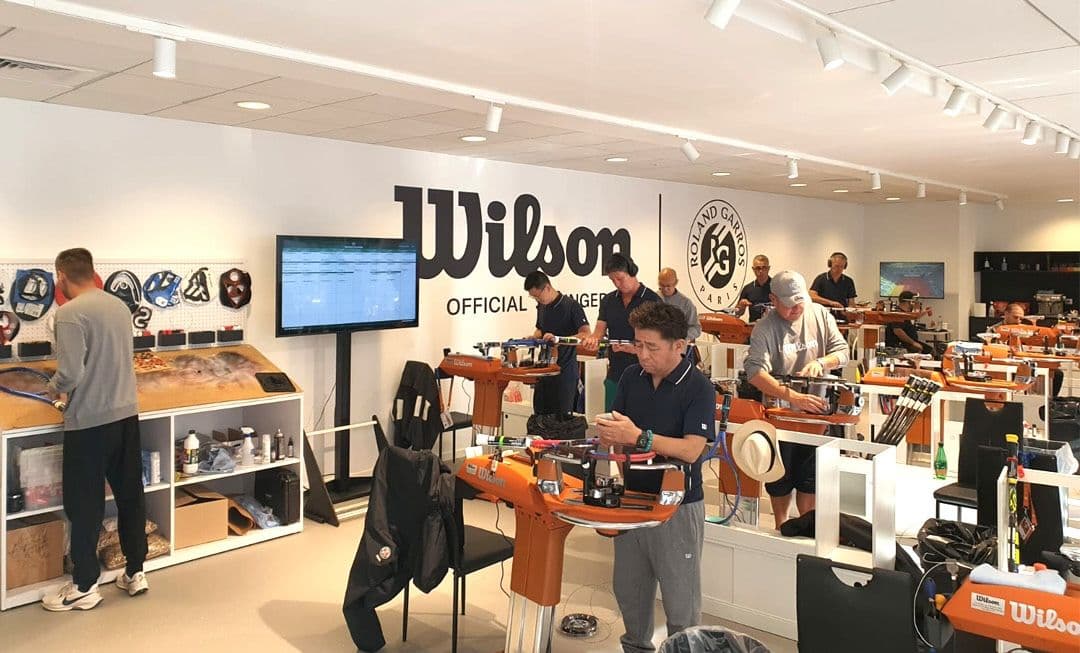
The Paris Heat Wave: Inside the High-Pressure World of the Roland Garros Stringing Room
May 27, 2026
Learn more